WhatsApp Message Templates: Approval Guide for Indian Businesses
How WhatsApp template categories work, why Meta rejects templates, and a workable approval workflow for marketing, utility, and authentication messages.
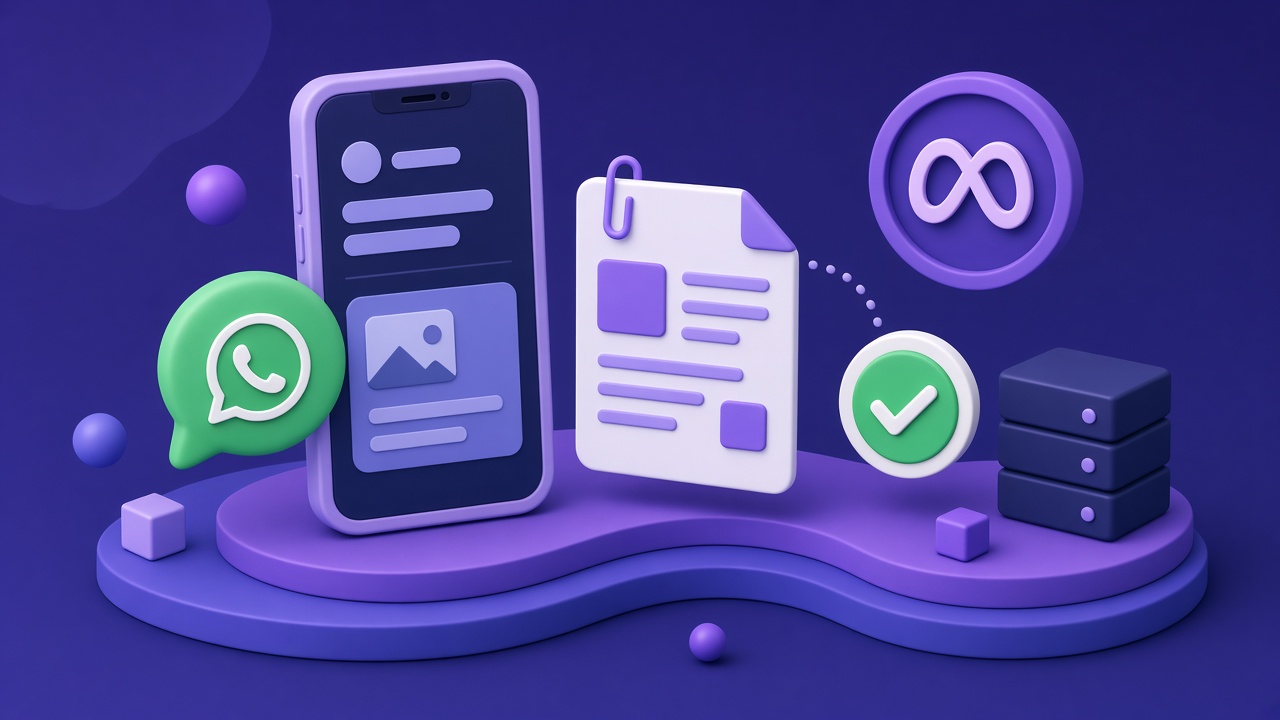
Template categories Meta uses
Outbound business-initiated messages generally require approved templates. Categories (marketing, utility, authentication, service) affect pricing and policy. Definitions live in Meta’s template documentation—do not guess category to save money; miscategorization can pause the WABA.
Common rejection reasons
- Promotional language in a utility template.
- Missing opt-out language where required for marketing.
- Variable placeholders without sample values.
- URL shorteners or mismatched domains vs verified business.
Writing templates that survive review
Write the customer-facing text first, then map to category. Keep one clear CTA. For India, English and Hindi templates may need parallel approval if you send both—check current Meta language support for your WABA.
Operational workflow for teams
- Draft in a shared doc with legal/marketing approval timestamps.
- Submit in Business Manager; track status daily near campaign launches.
- Version templates instead of editing live names—campaigns break if you hard-delete.
- Pair templates with consent practices for India outreach.
Using templates inside Samyoj
Samyoj broadcasts and automations should reference templates synced from your WABA. If a flow fails, check template status in Meta first, then Samyoj’s automation logs. See broadcast automation guide for sequencing.
Write a template that reviewers understand
Open with the customer benefit in plain Hindi/English—no hidden promo inside a utility category.
Add {{{1}}} variables only where needed; provide sample values in Business Manager.
Include opt-out line for marketing: “Reply STOP to opt out” if your lawyer agrees.
Avoid URL shorteners; use your primary domain.
Submit 48 hours before Diwali/Sale—queues spike.
If rejected, copy Meta’s reason verbatim into a shared doc; fix one issue per resubmit.
Think like a marketing lead, not a software shopper
Most teams search whatsapp message templates when WhatsApp already drives revenue—but ops is messy. Your buyer is usually content + compliance. They do not want another login; they want fewer missed chats and a number that still works after Diwali campaigns.
Success in 30 days is simple to say and hard to do: every inbound message has an owner within business hours, promotional sends use an approved template, and you can report template approval rate without opening five apps.
Monday to Friday rhythm
Monday: review weekend chats; assign overdue threads.
Tuesday: template performance—any spikes in blocks?
Wednesday: ad → WhatsApp handoff audit if you run Click-to-WhatsApp.
Thursday: train one new macro reply; retire one spammy broadcast.
Friday: leadership snapshot—chats opened, qualified, closed (definitions unchanged week to week).
Words that confuse buyers (use carefully)
- BSP vs Tech Provider—verify on Meta’s partner directory; Samyoj is a Tech Provider today.
- Coexistence—keep Business App + API; eligibility is Meta’s call.
- Quality rating—not the same as star reviews; it affects sending limits.
When you are ready, start the 14-day Launch trial and keep this page open as your operating manual—not a one-time read.
Template workshop (90 minutes)
0–15 min: list every message you currently send manually in WhatsApp App.
15–40 min: bucket them utility vs marketing honestly.
40–70 min: rewrite marketing with one offer, one deadline, one opt-out.
70–90 min: submit in WhatsApp Manager; assign someone to check status twice daily.
Hindi + English
India audiences may need both. Submit separate templates if Meta requires; do not mix scripts in one template without reviewer-friendly samples.
Extra questions teams ask in week one
How long does WhatsApp API onboarding take?
Meta and your provider control the clock. A clean Standard signup can finish in a day; display-name or portfolio issues can add a week. Coexistence depends on Meta eligibility—not a promise from any vendor.
Do I lose my WhatsApp Business App chats?
On Standard Cloud API registration, the same number usually leaves the mobile app. On Coexistence, the app can stay—read Meta’s current coexistence docs before you promise staff anything.
What is the first template I should submit?
A utility template tied to a real process you already run—order update, appointment confirmation, or payment receipt. Marketing templates should wait until utility is approved and quality rating is stable.
How does Samyoj pricing work with Meta?
Public plans: Launch trial, WhatsApp ₹899/month, Multi-channel ₹1,499/month, five teammates, 200 AI credits/month on paid plans. Meta conversation charges bill at actuals without Samyoj markup on published Meta rates—confirm on pricing.
Can I run Click-to-WhatsApp ads on day one?
Only if the number is active, billing works, agents reply fast, and you can track leads in one inbox. Slow replies waste ad spend more than slow SEO.
What is a Meta Tech Provider?
A partner track for software on WhatsApp Cloud API. Samyoj uses this wording today. BSP is a different track—verify in Meta’s directory before sales collateral says “official BSP.”
How do I collect opt-in for broadcasts?
Checkbox at checkout, keyword opt-in, or signed form at events—document the wording. Never buy phone lists.
What happens at the 250-recipient limit?
Many new portfolios start around 250 unique recipients per rolling 24 hours. Plan campaigns accordingly; scaling requires Meta’s quality and verification path.
Should I connect Instagram on day one?
Only if someone will answer Instagram daily. Otherwise master WhatsApp on the ₹899 plan first.
Where do I get official policy updates?
Meta WhatsApp documentation and WhatsApp Business Terms—blogs summarize; Meta decides.
Primary sources: Meta WhatsApp Business Platform documentation, Meta WhatsApp pricing, WhatsApp Business Terms, Samyoj pricing. Figures change—verify on Meta before you budget or publish customer promises.